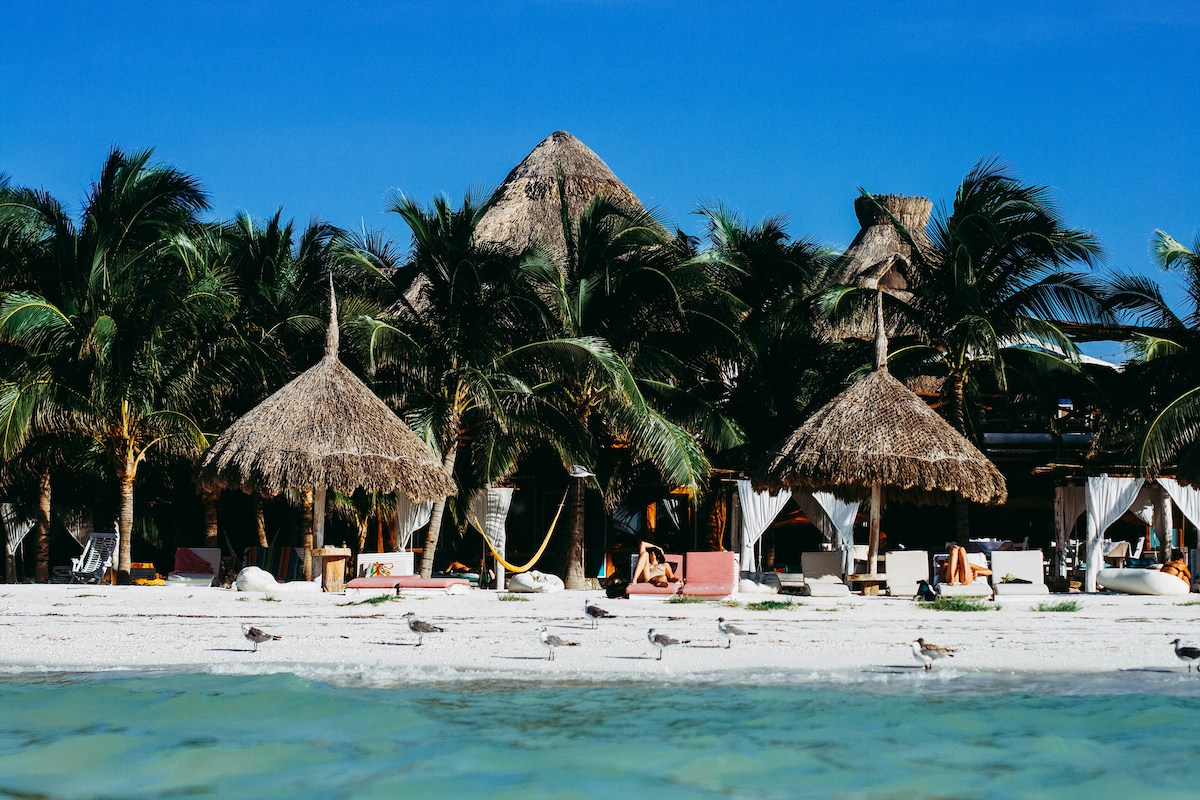
Mexican Beaches Set for a Sargassum-Free Summer: A Boon for Tourism and Economy
The beaches of Quintana Roo are poised for a sargassum-free summer, according to the state’s sargassum monitoring agency.
This prediction comes as a relief to both the tourism industry and visitors, who have dealt with the unsightly and ecologically disruptive seaweed for over a decade.
Esteban Jesús Amaro, director of the monitoring agency, attributes this positive forecast to favorable marine currents that are expected to keep the sargassum away from Mexican Caribbean shores for the remainder of the year. This prediction is based on satellite imagery and the recent impact of Hurricane Beryl, which dispersed the sargassum masses away from Mexico.
Amaro noted that trade winds have shifted, redirecting the seaweed northward towards the Greater and Lesser Antilles and the Dominican Republic. He anticipates that Quintana Roo could remain sargassum-free for up to seven months, potentially until February next year.
Climate change also plays a role in altering marine dynamics, leading to unexpected patterns that influence sargassum movements. Despite the optimism, Amaro cautioned that these predictions could change due to the unpredictable nature of ocean currents and temperatures.
The monitoring agency’s report shows significantly lower amounts of sargassum this year compared to previous years. The state-of-the-art research vessel Jorge Carranza Fraser, which has been tracking the seaweed from its origins near Africa to the Mexican coast, supports this data.
The vessel’s research aims to transform sargassum from a nuisance into an economic resource. Studies suggest that sargassum can be used to produce biogas and biofertilizers, offering a potential solution to its ecological impact.
Since 2011, massive amounts of sargassum have plagued Caribbean coastlines, including Mexico’s Yucatan Peninsula, causing economic and ecological issues. T
he seaweed not only deters tourists but also disrupts marine ecosystems. Researchers propose collecting sargassum while it’s still in the ocean to study its properties and potential uses better. However, large-scale collection’s impact on local ecosystems remains uncertain.
The absence of sargassum this summer is expected to boost tourism and improve the economic outlook for Quintana Roo. Beachgoers can look forward to pristine coastlines, while the local economy benefits from increased tourist activity.