The Invisible Threat at These Mexican Caribbean Beaches: Portuguese Man o’ War
Tourists flocking to the inviting waters of Cozumel and Playa del Carmen in the Mexican Caribbean need to beware of this jellyfish like creature – Portuguese Man o’ War
What is the Portuguese Man o’ War?
The Portuguese Man o’ War, often mistaken for a jellyfish, is actually a siphonophore – a complex colony of specialized, genetically identical organisms working together.
Unlike single organisms, siphonophores exemplify a remarkable example of natural collaboration, where individual units, called zooids, are interdependent and perform different roles ranging from feeding to reproduction.
This marine creature is named for its resemblance to 18th-century Portuguese warships under full sail.
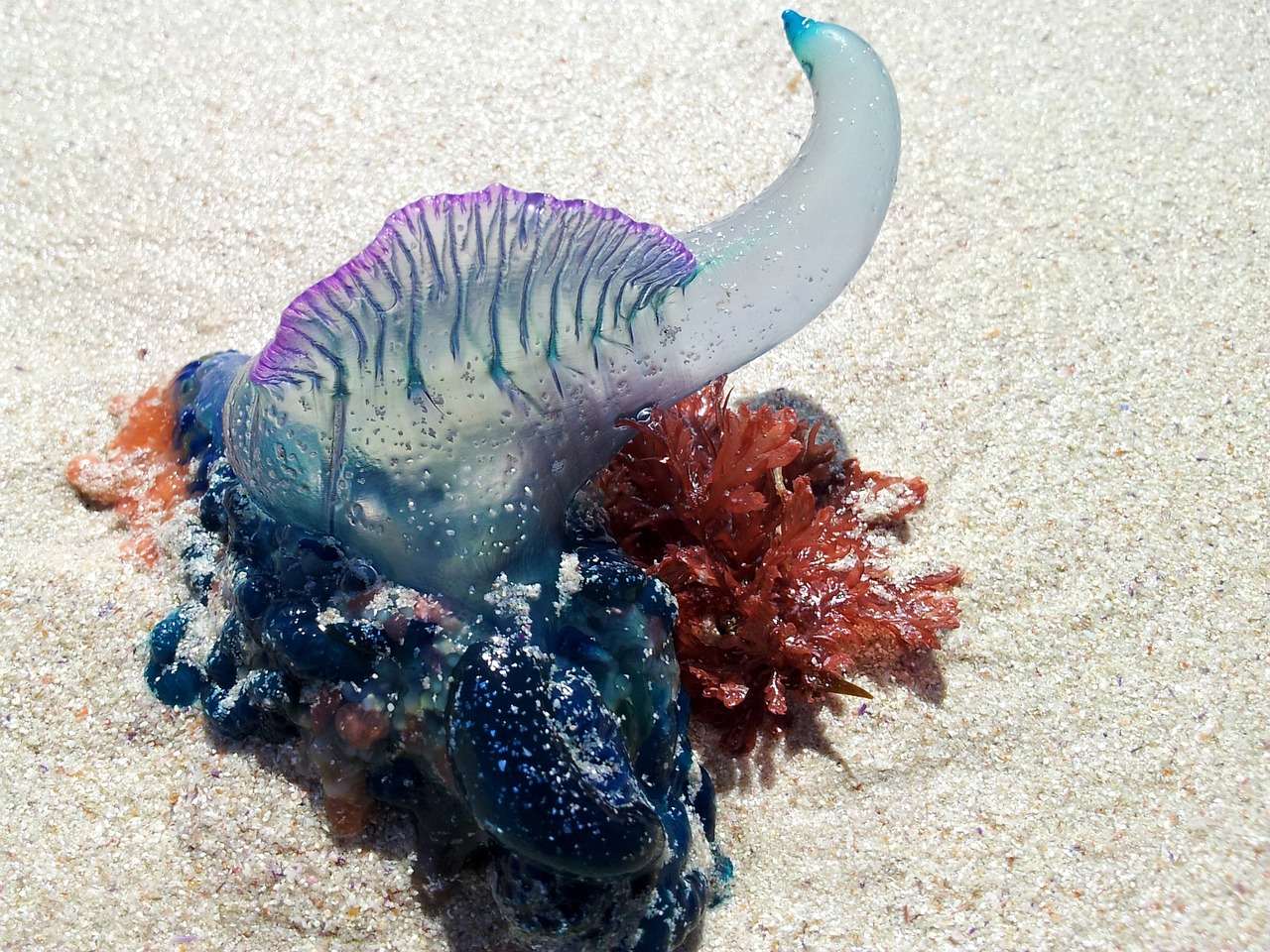
At first glance, the Portuguese Man o’ War is known for its striking appearance.
It boasts a translucent, gas-filled bladder, or pneumatophore, which allows it to float on the ocean’s surface, catching the wind to propel itself forward.
This bladder can be up to 30 centimeters (12 inches) long and rises above the water like a sail. Below the waterline dangle long, venomous tentacles that can extend up to 50 meters (165 feet) in length.
These tentacles are equipped with thousands of nematocysts, tiny stinging cells used to capture prey and deter predators.
Where is This Sea Creature Found?
Are you wondering where are Siphonophores found?
The Portuguese Man o’ War is found in both tropical and subtropical waters across the globe, thriving in the Atlantic, Pacific, and Indian Oceans.
This distribution showcases its adaptability to a range of marine environments, from open ocean to nearshore areas. Its presence is significantly influenced by seasonal shifts, ocean currents, and prevailing winds, which can carry these creatures across vast distances.
During certain times of the year, currents and winds can lead them closer to shore, leading to periodic appearances on beaches, which can surprise beachgoers and necessitate caution in affected areas.
So Portuguese man of war Caribbean is something to watch out for on your beach days.
What Happens When It Stings?
When the Portuguese Man o’ War stings, its tentacles release venom through tiny, spring-loaded capsules called nematocysts.
This mechanism is both a defense and a means to capture prey. The sting can cause a range of reactions in humans, from immediate, sharp pain and red welts that may last for hours to severe, systemic responses.
These more serious effects, though less common, can include difficulty breathing, changes in heart rate, and in rare cases, extreme reactions requiring medical attention. The severity of the sting depends on individual sensitivity, the amount of venom delivered, and the length of contact with the tentacles.
Does It Hurt When They Sting?
The sting of the Portuguese Man o’ War is notorious for its pain. Victims often describe the sensation as sharp and intense, likening it to being whipped with a hot wire.
This pain can be immediate and may last for several hours, with welts potentially remaining visible for days. The severity of the sting and the associated pain varies greatly among individuals, with some experiencing excruciating discomfort while others may have a more moderate reaction.
This variability underscores the unpredictability of encounters with this marine creature.
Precautions and Solutions in Case of a Sting from Portuguese Man o’ War
To prevent encounters with the Portuguese Man o’ War, it’s advisable to stay vigilant, especially in areas known for their presence.
Paying attention to beach warning flags and avoiding entering the water when warnings are in place are key precautions.
If you spot a Man o’ War on the beach or in the water, maintain a safe distance.
In case of a sting, it’s recommended to rinse the affected area with vinegar or seawater, not fresh water, to neutralize the venom.
Tentacles should be carefully removed with fine tweezers. Seeking medical attention for severe reactions is crucial.
In conclusion, respecting and understanding the marine environment, particularly regarding the Portuguese Man o’ War, is essential for safely enjoying the world’s beautiful beaches.
Being aware of their presence, knowing how to avoid stings, and understanding the correct first aid measures can significantly reduce the risk and impact of encounters.
This awareness, combined with a respect for marine life, ensures that beachgoers can continue to appreciate the natural beauty of our oceans while minimizing harm to themselves and the ecosystem.