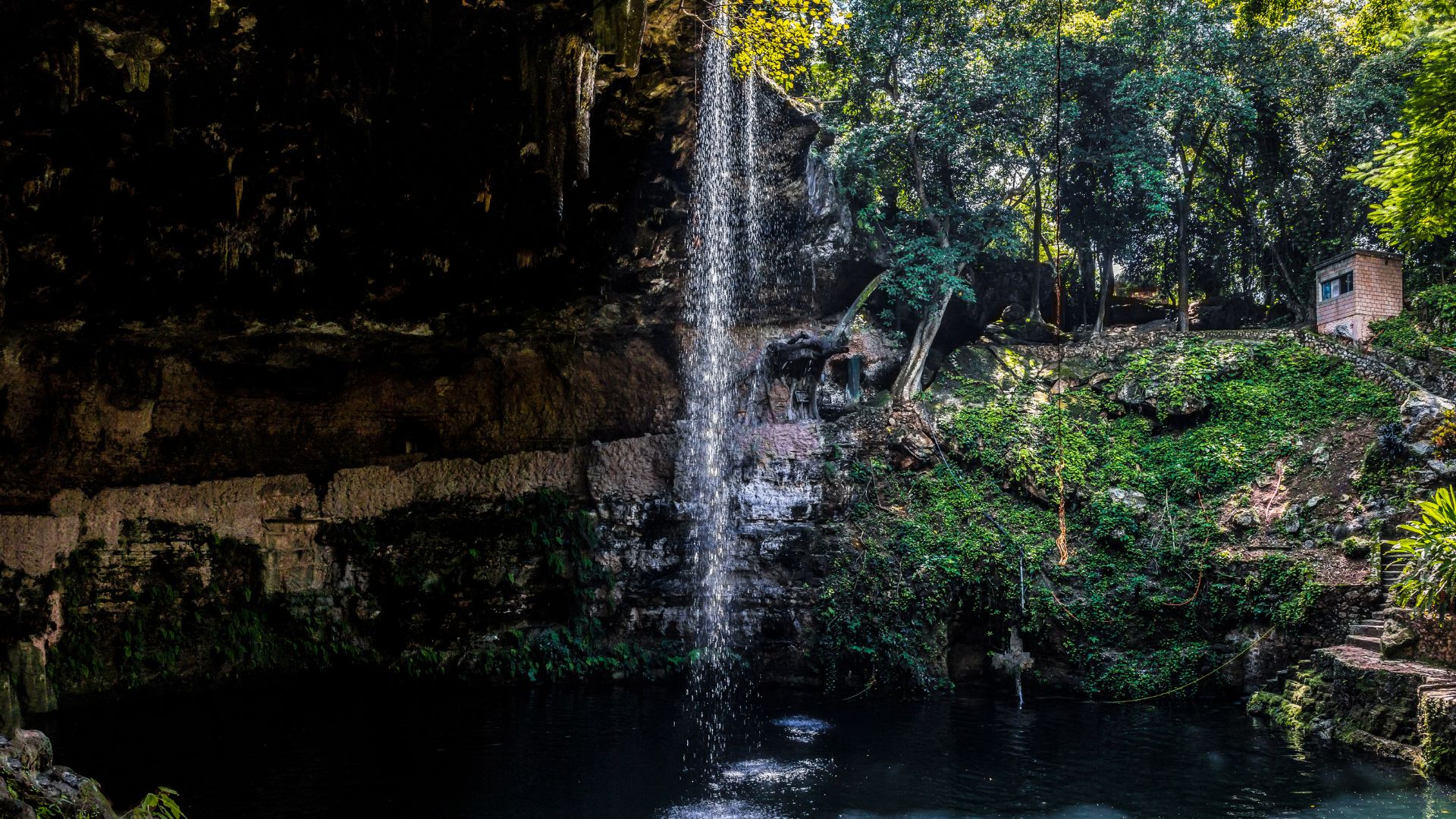
This “Cursed” Cenote Near Cancún Is So Beautiful, It’s Creepy
Deep in the jungles outside Cancún, there’s a place so stunning it feels unreal — a hidden cenote where turquoise light ripples across limestone walls, and silence hums louder than sound. Locals call it encantado — enchanted — but others whisper a different word: maldito. Cursed.
The truth lies somewhere in between.
Cancún may be famous for its beaches, nightlife, and luxury resorts, but not far from the polished Hotel Zone, a different kind of paradise awaits — one steeped in ancient legend, natural beauty, and a touch of mystery that refuses to fade.
Welcome to the “cursed” cenote — a place so breathtaking that even those who fear it can’t stay away.
The Legend Beneath the Surface
To understand why this cenote carries such an eerie reputation, you need to know what cenotes really are.
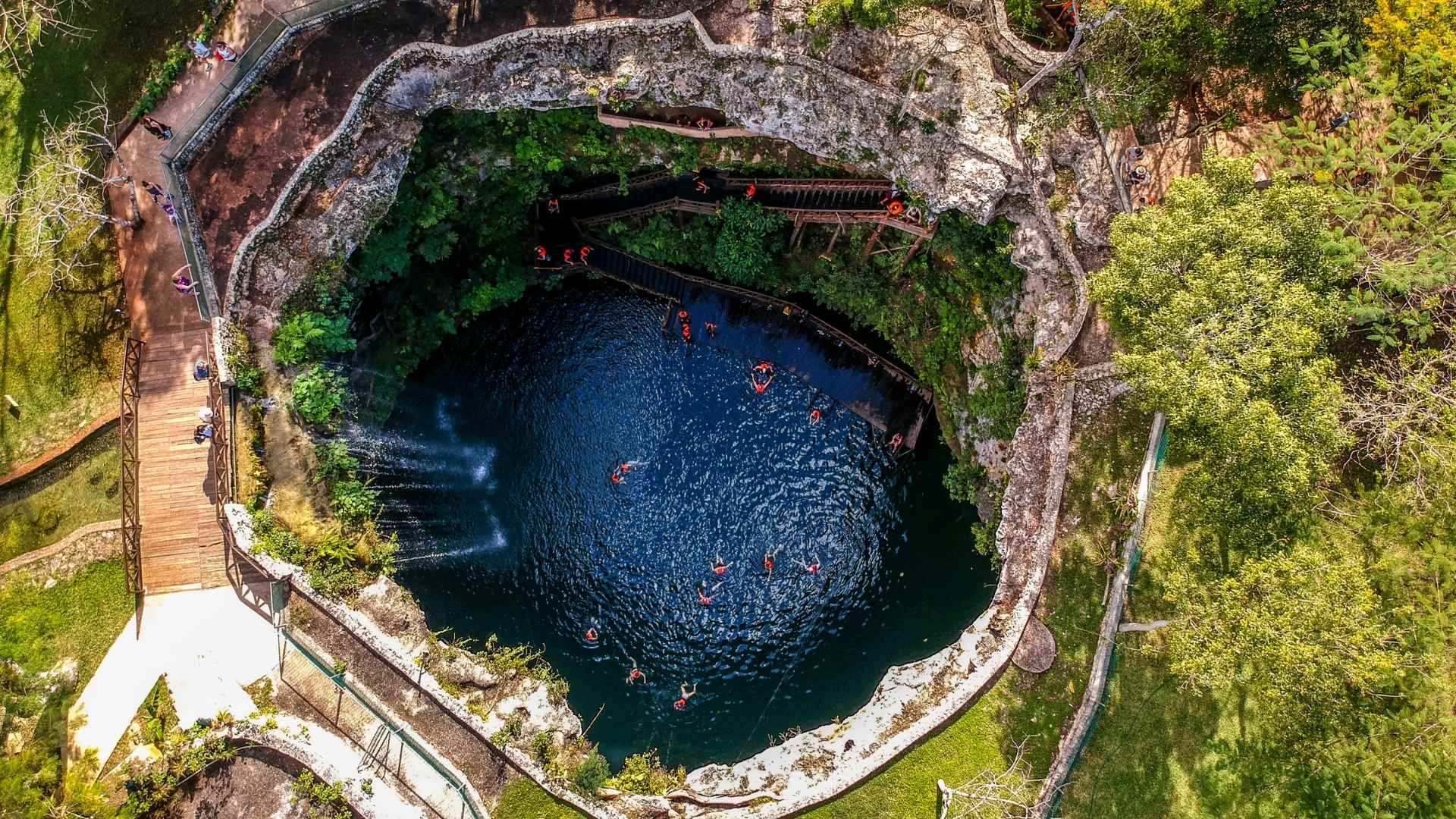
Long before tourists arrived, the ancient Maya believed these natural sinkholes were sacred gateways to the underworld — Xibalba, the realm of spirits. To them, cenotes weren’t swimming holes; they were portals, places where gods listened and souls passed between worlds.
The “cursed” cenote near Cancún — known by locals as Cenote del Silencio (Cenote of Silence) — sits deep in the jungle about an hour from the city. It’s not marked on most maps. You won’t find tour buses or signs pointing the way. Instead, you reach it by following an unpaved road that disappears beneath a canopy of trees and tropical bird calls.
According to local lore, this cenote was once the site of a tragedy. Some say a young woman disappeared there after wandering too close to the edge. Others say a priest performed forbidden rituals in its depths centuries ago. The story changes with every retelling — but one detail never does:
They say you can still hear whispers echoing from beneath the water.
A Beauty That Feels Unreal
When you arrive, the first thing you notice isn’t fear — it’s awe.
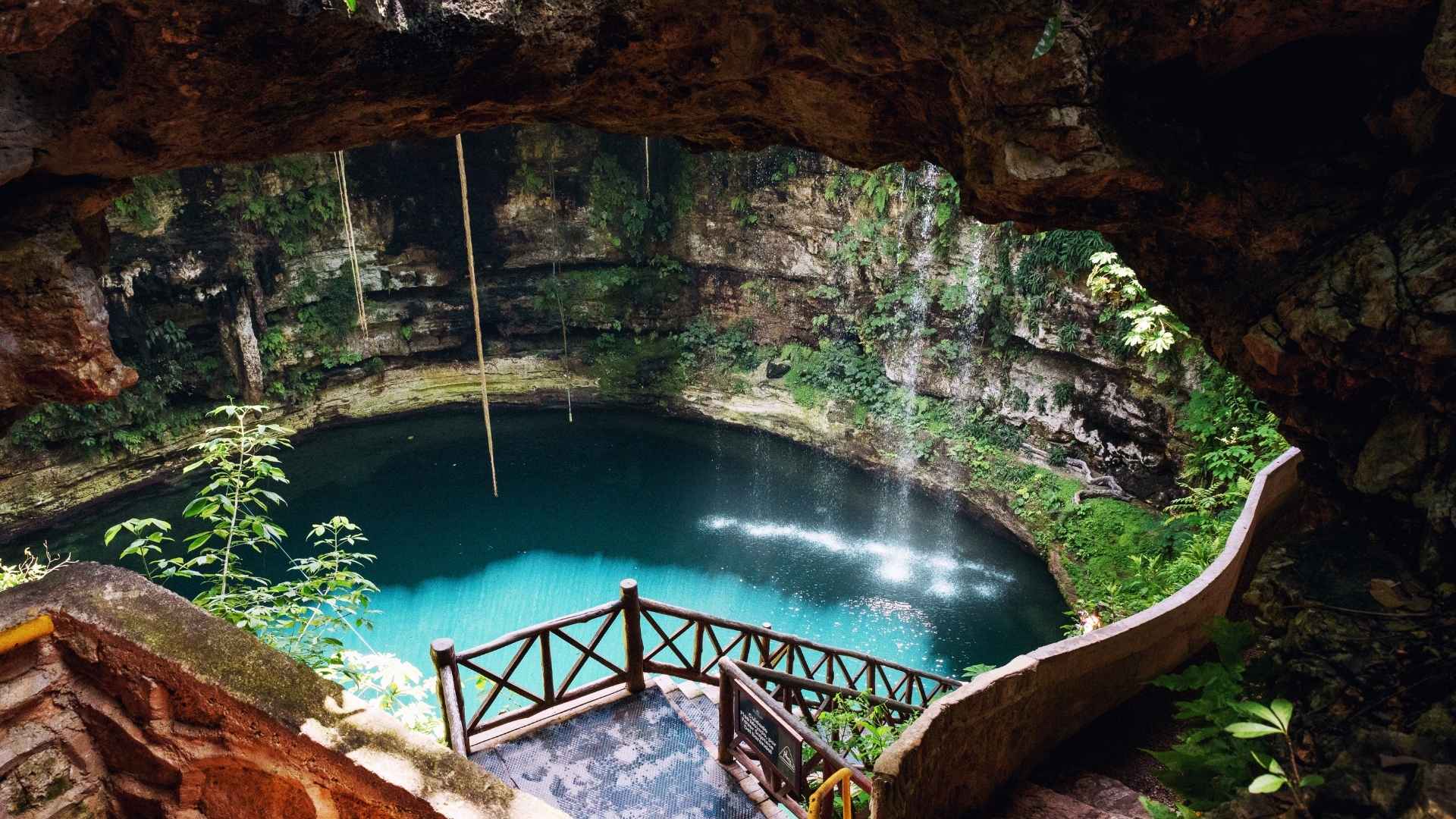
The cenote’s opening is hidden behind thick vines and moss-covered rocks, a secret doorway to another world. The air cools instantly. Sunlight breaks through the jungle canopy in shards, lighting up the turquoise water below like stained glass.
It’s breathtaking. So beautiful, in fact, that it feels… unnatural.
The limestone walls drip with mineral formations. Small fish flicker through the light. Every sound — every drop of water, every flutter of wings — feels amplified. It’s peaceful, yet there’s a tension in the air, as if nature itself is holding its breath.
Locals say it’s because the cenote is “alive.” That it watches. That it remembers.
Standing at the edge, it’s hard not to believe them.
When Science Meets Superstition
Of course, not everyone buys into the ghost stories. Geologists and environmentalists will tell you that cenotes form when limestone collapses over underground rivers, revealing the crystal-clear waters below.
Yucatán’s entire landscape is laced with them — thousands of cenotes, some open like natural pools, others hidden in caves so deep they’ve never been fully mapped.
But even scientists admit these places carry a strange energy. Their stillness, their clarity, their echoes — it all feels otherworldly.
Divers who’ve explored Cenote del Silencio say its underwater tunnels seem endless. Light filters through in eerie beams, illuminating ancient stalactites and bones — both animal and human. Archaeologists have found pre-Hispanic relics here: jade fragments, pottery, even remnants of ceremonial offerings.
So maybe the stories aren’t superstition after all. Maybe they’re memories — left behind by the people who believed this water connected them to something greater.
Encounters That Defy Explanation
Every local guide has a story.
One recalls a group of tourists who dove in and surfaced claiming they saw shadows moving beneath them — though no one else was around. Another swears his flashlight flickered out every time he tried to photograph the deepest chamber.
Some say they’ve heard laughter echoing through the tunnels. Others, whispers that seem to come from the stone itself.
And then there’s the most famous story: the diver who vanished.
Years ago, a solo explorer entered the cenote with professional gear and a plan to map its depths. He never came out. When a rescue team went in days later, they found his equipment floating intact near the surface — but no trace of him below.
To this day, locals say his spirit protects the cenote, warning off those who disrespect it.
Tourists Keep Coming Anyway
Despite the legends — or maybe because of them — travelers can’t resist visiting.
The cenote’s mix of danger and beauty is magnetic. It’s the kind of place you hear about from a taxi driver or a bartender, not from a brochure.
Some visitors come for the thrill — hoping for a brush with the supernatural. Others come for the photography; the way sunlight cuts through the turquoise depths makes it one of the most photogenic cenotes in the region.
And then there are those who come seeking calm. To meditate. To float in silence. To feel the weight of history beneath them.
Most leave changed. A few claim to feel “followed” for days after.
Either way, no one forgets it.
A Mirror of Cancún’s Duality
In many ways, this cenote mirrors Cancún itself — paradise with a shadow.
Above ground, the city sparkles with modern resorts, cocktail bars, and sun-drenched beaches. Below the surface, there’s another story — one written in limestone, myth, and memory.
Cancún’s reputation for beauty and excess often hides its deeper cultural roots. But here, at this quiet cenote, those worlds collide. You can feel the past pressing against the present — the ancient Mayan reverence for nature, the pulse of tourism, and the lingering sense that something beyond explanation still moves in these waters.
Why Locals Still Fear It (and Protect It)
Ask locals if they swim there, and most will shake their heads. Not because they don’t believe in science — but because they respect what the place represents.
In Mayan belief, every cenote has a guardian spirit — a Chac, or elemental being — who must be honored before anyone enters. Offerings of flowers, corn, or incense are still left at the edge of Cenote del Silencio by older residents who remember the old ways.
To them, the “curse” isn’t evil. It’s balance. It’s a reminder that beauty demands respect — that nature gives, but also takes back.
That belief has kept this cenote largely untouched by mass tourism. Unlike other popular swimming holes near Cancún, this one remains quiet, clean, and sacred.
Maybe that’s the real magic.
The Feeling You Can’t Shake
If you ever find yourself here — standing at the lip of this impossible blue water, surrounded by whispers of wind and time — you’ll understand what makes it so unsettling.
It’s not just the myths or the eerie silence. It’s the sense that you’ve stepped out of the modern world and into something ancient, watching you as much as you’re watching it.
You’ll feel drawn to jump in — to float, to explore, to see what lies below — but part of you will hesitate.
And that’s the spell of Cenote del Silencio.
It’s beauty with a heartbeat. Paradise with a pulse. A reminder that even in a place as vibrant and busy as Cancún, mystery still lingers beneath the surface — waiting for those brave enough to look.
The Real Meaning of the “Curse”
Maybe the cenote isn’t cursed at all. Maybe it’s just honest.
In a world that packages paradise into Instagram squares and resort deals, this place refuses to be tamed. It demands reverence. It asks for silence. It offers wonder — but only to those who give something in return: their humility.
The “curse” isn’t danger. It’s respect disguised as fear. And that’s why locals keep the secret alive. Because some places shouldn’t be fully understood. Some beauty should remain a little creepy.
A Final Word Before You Go
If you ever find yourself wandering the Yucatán jungle near Cancún, follow the whispers of adventure — but tread lightly.
Bring water. Bring curiosity. But most importantly, bring respect. Because the “cursed” cenote isn’t haunted by spirits — it’s haunted by the memory of how sacred nature once was, and still is.
And if you listen closely, you just might hear the water say it back.
![Best Beaches in Cancun for Snorkeling [In 2025]](https://cancuntravelblog.com/wp-content/uploads/2025/05/snorkeling-1551757_1280-768x510.jpg)


![8 Popular & Unique Things to do in Cancun [Hidden Gems, Day Trips & More]](https://cancuntravelblog.com/wp-content/uploads/2024/03/IMG_8762-768x576.jpg)

