Shocking Sargassum Surge 2025: Is Your Quintana Roo Vacation at Risk?
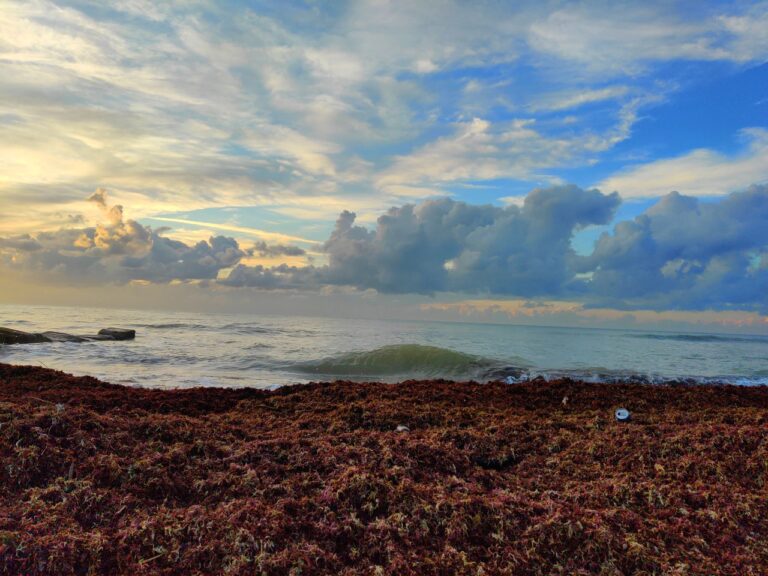
Recent reports from the Ministry of Environment and Natural Resources (Semarnat) reveal a staggering figure: over 36 million tons of sargassum have been collected from the Quintana Roo coastline since January 26, 2022.
The Coastal Marine Information and Analysis System (Sinar) provides insight into the municipalities impacted the most, with Tulum leading the way, having recorded a hefty 14,988,346 tons of the troublesome macroalgae. Following closely are Cozumel and Cancún, which accounted for 11,486.71 tons and 6,840.71 tons, respectively.
Other affected areas include Playa del Carmen with 1,399.44 tons, Othón P. Blanco at 1,109.15 tons, Puerto Morelos with 936.84 tons, Isla Mujeres with 52.77 tons, and Felipe Carrillo Puerto with a modest 2.75 tons. Notably, Bacalar, José María Morelos, and Lázaro Cárdenas recorded zero sargassum incidents, according to information from Noticaribe.
The increase in sargassum is not only an environmental concern but poses potential health risks as well. Rosa E. Rodríguez Martínez, a marine sciences professor at the Institute of Marine Sciences and Limnology (UNAM), highlighted that the decomposition of sargassum releases hydrogen sulfide, which can lead to adverse health effects such as nausea, eye irritation, headaches, and sleep disturbances.
While no immediate danger to the general public has been identified, it is suggested that vulnerable groups—including pregnant women, children, and individuals with pre-existing health conditions—take precautions and limit their exposure.
Rodríguez Martínez also pointed out that heavy sargassum accumulation could degrade beaches, impeding both tourism and local fishing industries. Although the study has not established a clear link between chronic low-level exposure to hydrogen sulfide and long-term health effects, further research is warranted.
Significant environmental changes accompany the sargassum influx, as noted by researcher Eduardo Gabriel Torres Conde from UNAM. Decomposing sargassum results in a phenomenon termed “sargassum brown tide,” which negatively affects water quality and contributes to the deterioration of seagrass meadows.
These habitats are essential for marine ecosystems, and their natural recovery process is prolonged, often taking decades due to factors like sediment movement and wave action in near-coastal environments.
In response to this ongoing challenge, the Federal Maritime Zone Directorate (Zofemat) in Playa del Carmen is set to initiate a hiring spree. They aim to bolster the workforce dedicated to managing and collecting sargassum this year, anticipating a significant increase in the influx of this macroalgae.
As sargassum continues to be a pressing environmental issue for Quintana Roo, authorities are urging swift action to protect the region’s natural resources and the wellbeing of its residents and visitors alike.